
01 / Article
Knee Injections in St. Petersburg: PRP vs. Hyaluronic Acid vs. Cortisone
Compare PRP, hyaluronic acid, and cortisone for knee pain and learn if a stem cell knee injection in St. Petersburg may help you
6 min read
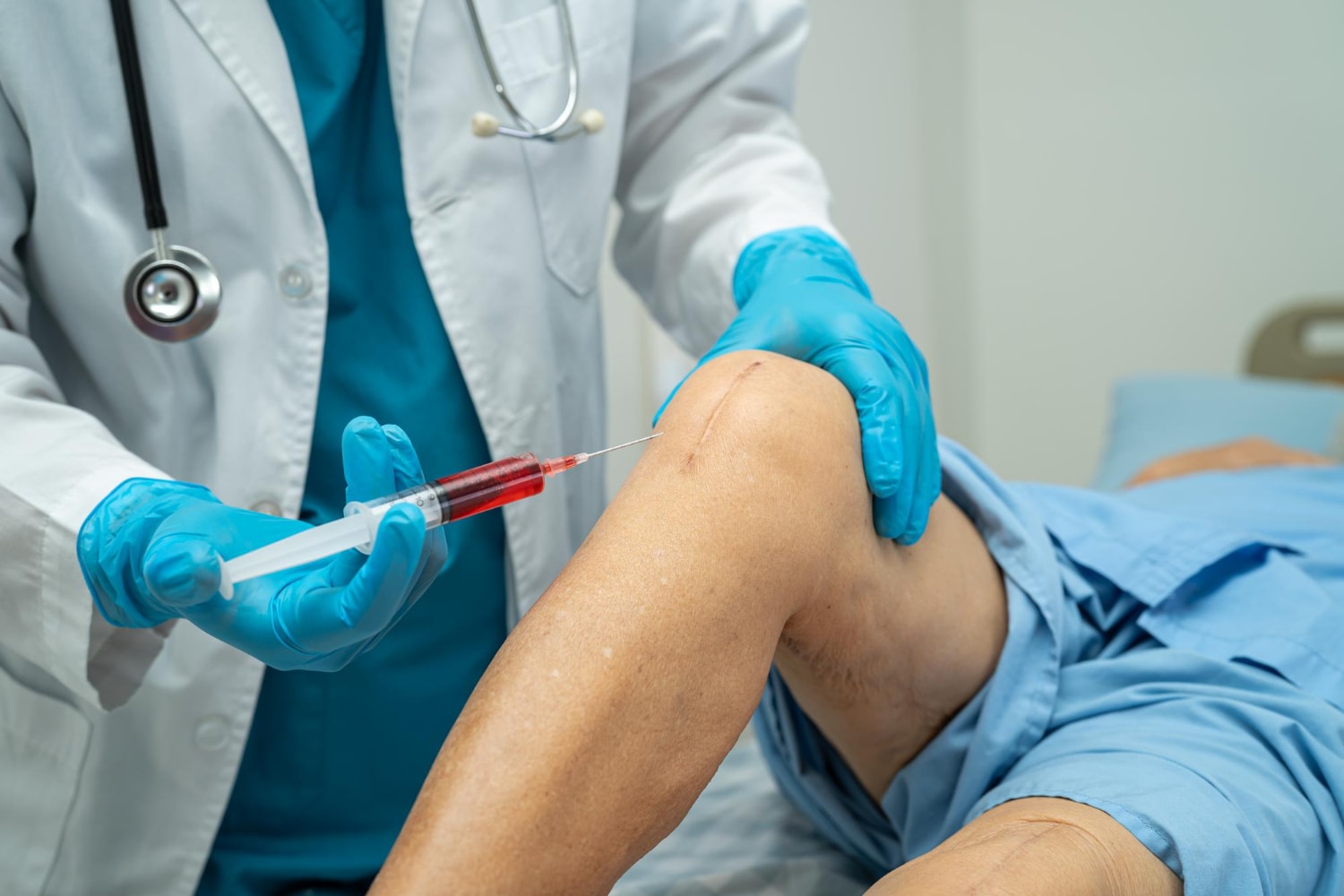
Knee pain can sneak up on active adults in St. Petersburg. Long walks on the waterfront, pickleball games, chasing kids or grandkids, and travel days at the airport can all feel harder when every step hurts. As late summer rolls into busy fall schedules, many people want relief that lets them stay in motion without jumping straight to surgery.
Modern non-surgical knee injections can sometimes help reduce pain, calm irritation, and support better movement. For many people, the right plan can delay or even avoid surgery, keep them mobile, and let them enjoy our Gulf Coast lifestyle with less daily discomfort.
Three of the most common options are PRP injections, hyaluronic acid gel shots, and cortisone shots. Some people also hear about stem cell knee injections in St. Petersburg and wonder how that fits in. Each choice has a different role, timeline, and set of pros and cons.
Our goal here is to give you clear, simple guidance. We will break down what each type of injection is usually best for, how long relief may last, and how a clinic like ours can help you sort through your options based on your knees, your health, and your goals.
PRP Knee Injections: Harnessing Your Body’s Healing Power
PRP stands for platelet-rich plasma. It is made from your own blood. A small sample is drawn, then spun in a special machine to separate and concentrate the platelets. Platelets are tiny cell fragments that carry growth factors, which may help support tissue repair and reduce irritation in the joint.
With PRP, the goal is not just to cover up pain. The idea is to give the knee a boost of your own natural healing components. PRP is often discussed for:
- Early to moderate osteoarthritis
- Lingering sports or activity injuries
- Tendon or ligament soreness around the knee
- Chronic knee pain that has not improved with rest and basic care
People who like PRP often want a more natural or regenerative style of care. They may want to stay active through the busy fall months, keep golfing, walking the pier, or joining weekly pickleball games, but without relying only on quick-fix shots.
Some possible benefits of PRP compared with cortisone include:
- Relief that may last longer once it kicks in
- Support for joint tissues instead of just masking symptoms
- A focus on the underlying irritation in the joint
There are also limits you should know:
- It can take several weeks to feel full effects
- Many plans involve a short series of injections, not just one injection
- Results can vary from person to person
People sometimes ask how PRP compares to stem cell options. PRP uses your platelets and growth factors, not stem cells. Many patients start with PRP because it is often a simpler first step in the regenerative family of treatments. In some cases, if knee damage is more advanced or if PRP has not given enough change, a provider may discuss other options, including stem cell knee injections in St. Petersburg, as part of a broader plan.
Hyaluronic Acid Gel Shots: Replacing Lost Cushion and Glide
Hyaluronic acid is a slippery, gel-like substance that your body naturally makes inside joints. It helps with lubrication and shock absorption. When injected into the knee, it is sometimes called a gel shot or viscosupplementation.
Over time, the natural joint fluid in an arthritic knee can thin out. That can lead to:
- Stiffness getting up from a chair
- Grinding or crunching feelings with steps
- Pain that flares with walking, pickleball, or long days on your feet
Gel shots try to restore some of that lost cushion and glide. They are often a good fit when osteoarthritis is mild to moderate and there is still some cartilage left in the joint. If a knee is truly “bone on bone,” the results can be less predictable.
Hyaluronic acid injections may be helpful if you:
- Feel stiff and creaky but still have decent mobility
- Are not ready for surgery and want to try more conservative options
- Cannot take certain oral pain or anti-inflammatory medications
- Notice more symptoms when you are traveling, sightseeing, or standing in lines
Relief from gel shots usually builds slowly. It often takes a few weeks before you can judge how much change you are getting. When it works well, the comfort can sometimes last for months at a time.
Compared with cortisone, gel shots may offer clearer gains in smooth movement and walking comfort for some people, especially when combined with other support like:
- Gentle chiropractic care for lower back, hips, and knees
- Targeted rehab exercises to support leg muscles
- Weight management plans
- Lifestyle changes to reduce extra strain on the joints
Cortisone Knee Injections: Fast Relief with Important Tradeoffs
Cortisone injections are well known for a reason. They are strong anti-inflammatory shots that can calm a painful flare quickly. When swelling is high and every step feels angry, cortisone can sometimes bring fast relief so you can get through daily life.
Cortisone might be considered when you have:
- Severe short-term pain or a sudden flare of arthritis
- A knee that is so swollen it is hard to bend or straighten
- Pain that keeps you from sleeping
- An important trip, event, or season coming up and you need quick help
Many people feel better within a short time after a cortisone shot. But this speed comes with tradeoffs. The relief may be temporary. Providers usually limit how often you can get cortisone shots in the same joint each year. Repeated use over time may potentially affect cartilage or soft tissues, so it is rarely used as a long-term stand-alone plan.
Because of this, cortisone often plays a supporting role:
- To calm a flare while you start rehab exercises
- To give you a window of comfort while planning PRP or gel shots
- To keep you functioning while you and your provider discuss other non-surgical or regenerative options
In some care plans, cortisone is used as a bridge while people explore longer-term strategies like PRP or conversations around treatments such as stem cell knee injections in St. Petersburg, depending on their case and goals.
Choosing Your Best Option: How Care Is Tailored
The best injection for one person may not be right for another. That is why a real knee evaluation matters. A typical visit for knee pain often includes:
- Health history and a talk about your daily activities
- Hands-on exam of the knee, hip, and lower back
- Review of past imaging or ordering imaging when needed
- Discussion about your goals: walking the beach, playing tennis, golf, or keeping up with work
From there, a provider can match treatment choices to your situation. The decision between PRP, hyaluronic acid, cortisone, or other therapies usually depends on:
- How advanced your arthritis or injury is
- Your general health and medications
- How quickly you need relief
- How open you are to regenerative options
Knee injections are often paired with:
- Chiropractic care for spine and extremity alignment
- Targeted rehab or stretching
- Bracing or support when useful
- Guidance on activity levels and pacing
Many people also ask about what life looks like after an injection. Common topics include:
- How soon they can drive
- When they can return to work
- How long to wait before sports or workouts
- How many visits they might need
Seasonal planning can help too. Some people time injections before:
- Holiday travel
- Race season or charity walks
- A busy period at work or with family
- Visits from friends and relatives
Planning ahead with your provider can help you feel more confident that your knees will keep up with your plans, not hold you back.
Take The Next Step Toward Lasting Knee Relief
If knee pain is limiting your daily activities, we are here to help you explore safe, research-backed options. Learn how a stem cell knee injection in St. Petersburg at Suncoast Integrative Healthcare may support your body’s natural healing process and improve function. To discuss your symptoms, goals, and whether this approach is right for you, contact us to schedule a personalized consultation.



Next step
Talk with us about your care
Call (727) 519-3757 or request a visit — our St. Petersburg team is here to help.