
01 / Article
Run Farther, Hurt Less: Smart Answers for Sore Knees
Learn causes, prevention tips, and non-surgical options for knee pain treatment in St. Petersburg, including chiropractic care and regenerative therapies for runners
6 min read
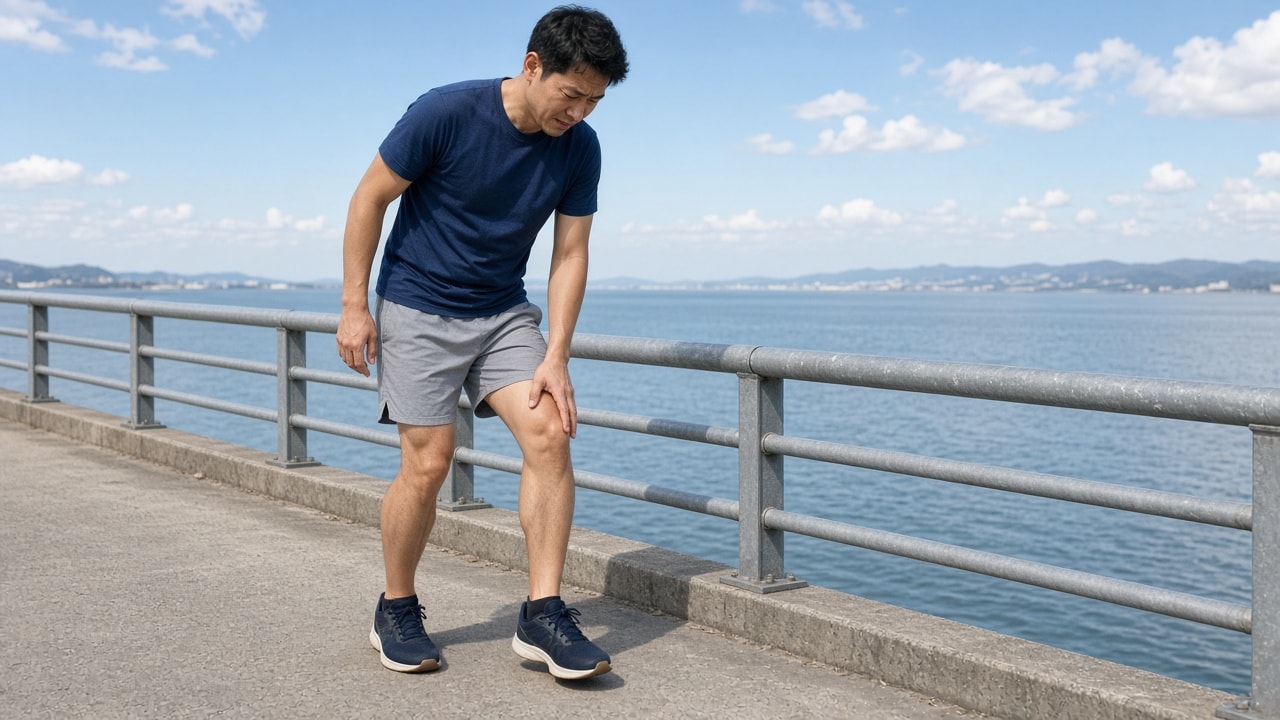
Knee pain can turn a great run along Tampa Bay into a slow, limping walk back to the car. If you run the bridges, the waterfront paths, or train for local races, your knees take a lot of stress with every step. Knowing what is going on inside that joint can help you keep running longer with less pain.
As fall race season ramps up, many runners increase mileage, add speed work, or push harder on long runs. That is often when little aches start to grow. When runners try to push through knee pain, a small irritation can turn into a bigger problem that lingers for months. At our St. Petersburg pain relief clinic, we see how nonsurgical, drug-free care can help runners recover, move better, and stay on the road. Let us break down why knees hurt, when to get help, and how smart treatment can protect your training.
Why Runners' Knees Hurt
Runners use their knees over and over, so even small issues can add up. Some of the most common problems we see include:
- Runner's knee, or pain around or behind the kneecap
- IT band syndrome, pain on the outer side of the knee
- Meniscus irritation or tears inside the joint
- Early arthritis that makes the joint stiff and achy
- Tendinitis from overuse in the patellar or quad tendon
Local running habits can make these problems worse. Many St. Petersburg runners love:
- Bridge and causeway runs with long climbs and downhills
- Hard concrete sidewalks downtown that give very little shock absorption
- Higher mileage as race dates get closer
- Hot, humid days that lead to fatigue and sloppy form
When the hips and core are weak, or the ankles are stiff, the knee has to twist or bend in ways it is not built for. Old ankle sprains, hip tightness, or low back issues can also change your stride and throw extra force into the knee joint. Over time, the cartilage, tendons, and ligaments get irritated.
The key is to find the root cause. If care only focuses on the sore spot and skips the hips, feet, and back, the pain often returns once training picks up again. A full-body view of your running form is usually the first step toward lasting knee pain relief.
When Knee Pain Is a Warning Sign You Cannot Ignore
Some aches after a hard workout are normal. But certain signs tell you it is time to slow down and get checked before things get worse. Red flags include:
- Sharp or stabbing pain during or after a run
- Swelling that lasts more than 48 hours
- Buckling, giving way, or feeling like the knee will not hold you
- Locking or catching when you bend or straighten the knee
- Painful popping that repeats with each run
Even if your knee does not have those sharp symptoms, nagging pain that keeps showing up is still a concern. If you find yourself:
- Shortening your runs to avoid pain
- Changing your stride, like limping or turning your foot out
- Avoiding hills, bridges, or stairs because of your knee
then your body is likely protecting an injury or weakness.
Ignoring knee pain can spread the problem. When one joint hurts, you often change how you move. That can stress the hips, lower back, or ankles and start a chain of new injuries. It can also speed up wear on the cartilage and make recovery take longer. Getting professional knee pain treatment in St. Petersburg early often means simpler, less invasive care and a better chance to stay ready for your favorite races.
Nonsurgical Knee Pain Relief Options for St. Pete Runners
Many runners worry that knee pain means surgery, long breaks from running, or strong medications. That is not always the case. There are nonsurgical options that focus on how your whole body moves, not just the knee.
Chiropractic care can help with joint alignment in the lower back, hips, knees, and ankles. When these joints move well together, each step puts less stress on the knee. With better biomechanics, your form improves and the load spreads more evenly through your legs.
Some runners benefit from regenerative medicine, which aims to support the body's own healing response in tissues like ligaments, tendons, and cartilage. This type of care can be helpful for certain chronic or stubborn knee issues.
Targeted therapies, such as laser therapy, can be used to support:
- Pain reduction
- Local circulation around the joint
- Tissue healing in irritated areas
Spinal decompression may be helpful when nerve function from the lower back is part of the picture, since nerve irritation can change muscle control in the legs.
The most effective plans for runners tend to mix hands on care with active work. That might include:
- Stretching for tight hip flexors, quads, hamstrings, and calves
- Strengthening for glutes, hips, and core muscles
- Mobility drills for ankles and hips
- Form cues that fit your natural stride
Instead of a one-size-fits-all sheet of exercises, treatment is built around what your body needs and the distances you like to run.
Building a Runner Friendly Treatment Plan in St. Petersburg
When you come in for a knee pain evaluation, the visit is about more than a quick look at your joint. We usually start with a detailed health history and questions about your running habits, such as:
- Weekly mileage and terrain
- Recent changes in shoes, pace, or training plans
- Past injuries to your knees, hips, back, or ankles
From there, we examine how you move. That can include gait assessment, simple balance tests, and checking hip, knee, and ankle motion. Orthopedic tests and, when appropriate, imaging can help show what is happening inside the joint.
At Suncoast Integrative Healthcare, we combine these findings to build a plan that fits your training schedule and race goals. A runner preparing for a short local 5K may need a different approach than someone working toward a marathon. We also think about where you are in the injury cycle, whether the pain started last week or has been quietly building for years.
Timelines can vary:
- Acute pain often calms faster with the right support and activity changes
- Chronic pain usually takes more time as we retrain movement patterns and rebuild strength
Consistency is key. Sticking with visits, doing your home exercises, and making temporary changes to training can make a big difference in how fast you get back to comfortable miles. Having knee pain treatment in St. Petersburg, close to your usual routes and daily routine, can make it easier to follow through and track progress.
Run Strong Into Race Season
Fall brings packed race calendars, charity runs, and long training weekends around Tampa Bay. Waiting until knee pain ruins those plans is frustrating and often avoidable. A proactive knee checkup before big distance jumps can help catch small issues before they turn into something that stops you from toeing the start line.
There are also simple habits runners can build into weekly training to protect their knees, such as:
- Short dynamic warm-ups before heading out, not just the first mile as a warm-up
- Gentle post-run stretching for the hips, quads, hamstrings, and calves
- Gradual mileage increases instead of big jumps from week to week
- Cross-training with low-impact work like cycling, swimming, or strength sessions
- Shoes that match your foot type and the local surfaces you run on
At Suncoast Integrative Healthcare in St. Petersburg, we focus on helping runners move well, feel better, and enjoy pain-free miles with nonsurgical, drug-free care options. With the right plan, knee pain does not have to control your training. You can keep exploring the streets, bridges, and paths along Tampa Bay with confidence in every step.
Take The First Step Toward Pain-Free Movement Today
If knee pain is limiting your daily activities, we are here to help you find lasting relief. Explore your options for personalized knee pain treatment in St. Petersburg with Suncoast Integrative Healthcare and see how our team can support your healing. To schedule a visit or ask questions about your symptoms, simply contact us and we will help you get started.


Next step
Talk with us about your care
Call (727) 519-3757 or request a visit — our St. Petersburg team is here to help.